Trauma & Grief Care
at your pace
Trauma-informed IV ketamine for PTSD, complex trauma, and traumatic grief. You never have to tell us your story to get care.
Start with a simple conversation. No pressure — just clarity.Trauma-informed IV ketamine for PTSD, complex trauma, and traumatic grief. You never have to tell us your story to get care.
Start with a simple conversation. No pressure — just clarity.Music City Ketamine offers trauma-informed IV ketamine therapy in Franklin, Tennessee, for adults living with PTSD, complex trauma, or traumatic grief when first-line treatments haven’t been enough. Care is led by Marla Peterson, CRNA, and built around your choice and control. You never have to describe what happened. Ketamine is used off-label for these conditions and tends to work best alongside trauma-focused therapy.
Trauma changes how safe a room feels, how a body reacts to a closed door, and how much control you need before you can relax. We designed our process around that. Nothing happens without you knowing what comes next, and you can pause at any point.
Flashbacks, hypervigilance, numbness, and the long tail of repeated or early trauma.
IV ketamine for PTSD →When early adversity shaped your stress system long before you had words for it.
Ketamine and childhood trauma →When a death was sudden, violent, or unexpected, and grief and trauma arrived together.
Traumatic grief →When the wound is guilt and shame, not fear. Common in veterans, first responders, and clinicians.
Ketamine and moral injury →Combat trauma, military sexual trauma, and the cumulative load of the job.
Veterans →PTSD after a traumatic delivery, an ICU stay, or a frightening diagnosis.
Birth and medical trauma →
We need your medical history, medications, and the symptoms you’re living with. The details of your trauma are yours to share, or not. Many of our patients never tell us, and their care is no different. Read how trauma-informed care works here.
You choose the music, the lighting, the eye mask, and whether a support person comes with you. You can stop at any time, for any reason. The infusion room is private. One patient at a time.
Marla is a Certified Registered Nurse Anesthetist with more than 20 years of experience. She oversees every infusion with continuous monitoring, and your dose is adjusted to how you respond. What dissociation feels like, and why it’s usually not a flashback.
Ketamine is not a replacement for trauma therapy. With your permission, we coordinate timing with your therapist so the days after an infusion can be used well. Don’t have one? Here’s how to find a trauma-informed therapist in Tennessee.
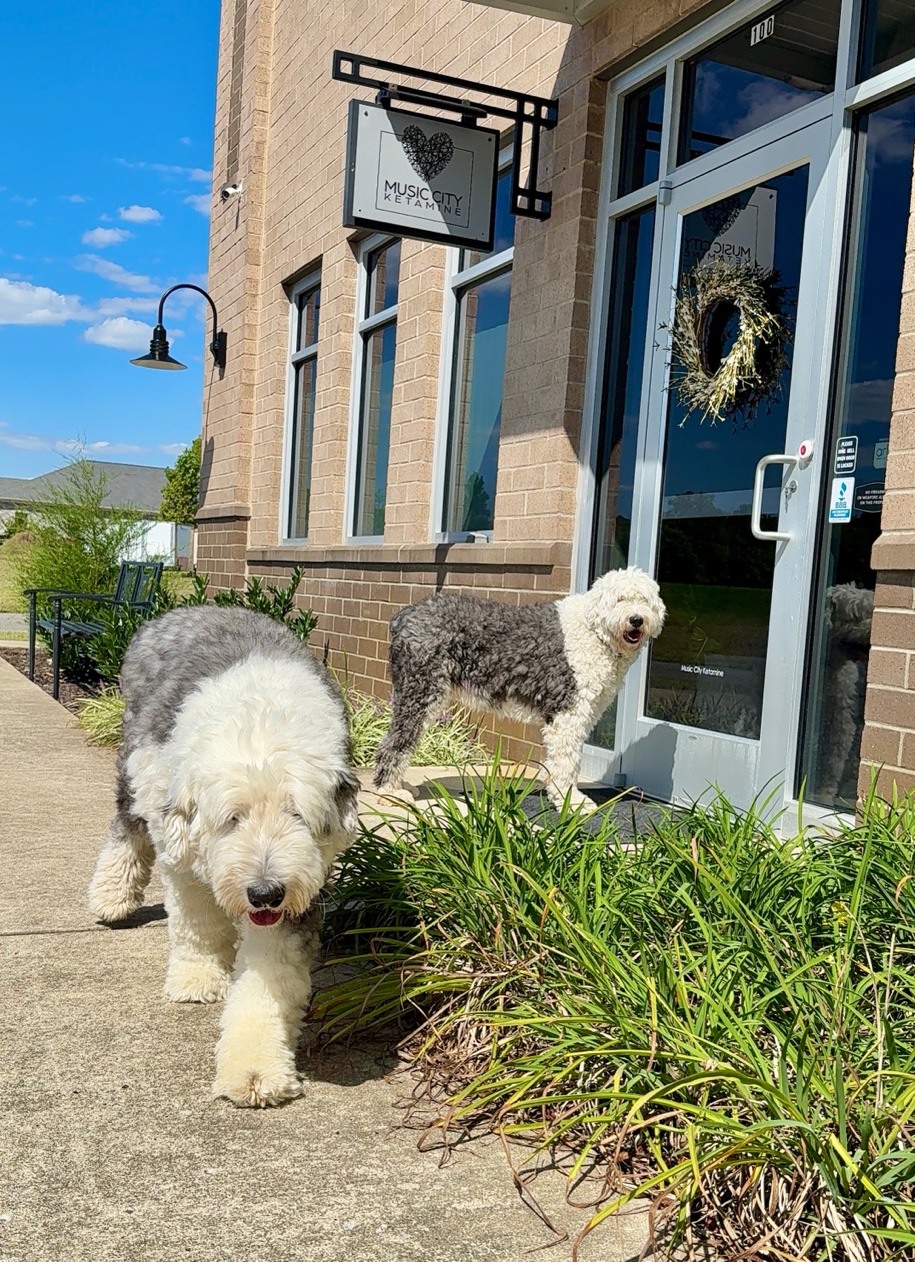
Our Old English Sheepdogs are part of the welcome here, and many patients say they make the place feel less clinical. If dogs aren’t your thing, just tell us.
The strongest data is in chronic PTSD. A 2014 randomized trial in JAMA Psychiatry (Feder et al.) found a single ketamine infusion reduced PTSD symptoms at 24 hours compared with an active control. A 2021 trial in the American Journal of Psychiatry (Feder et al.) gave six infusions over two weeks and found a significantly larger drop in PTSD severity than the control, with 67% responding versus 20%.
There are no trials yet built specifically for childhood trauma, traumatic grief, or birth trauma, and results vary from person to person. Trauma-focused therapies (Prolonged Exposure, Cognitive Processing Therapy, EMDR) remain first-line. We think ketamine earns its place when those haven’t been enough, or when depression and hyperarousal make the work feel impossible. Compare every PTSD treatment available in Nashville.
Each infusion is $475. HSA and FSA cards are accepted, and we provide superbills for out-of-network reimbursement.
We work alongside trauma therapists, EMDR clinicians, psychiatrists, and chaplains across Williamson and Davidson counties. We share treatment timing with your client’s written consent, never replace your work, and send clients back to you for integration. To set up a referral relationship or schedule a lunch-and-learn at the clinic, email [email protected] or call (615) 988-4600.
No. You never have to describe what happened to receive infusions here. Marla needs your medical history, current medications, and what symptoms you're living with. The story itself belongs to you and, if you choose, your therapist.
No. IV ketamine is FDA-approved as an anesthetic, and its use for PTSD, trauma, and grief is off-label. The strongest evidence is for chronic PTSD, including a 2021 randomized trial in the American Journal of Psychiatry. There are no trials yet designed specifically for traumatic grief or childhood trauma, and we say so plainly.
No. Trauma-focused therapies such as Prolonged Exposure, Cognitive Processing Therapy, and EMDR are first-line treatments. Ketamine is most useful when those haven't been enough, or when depression and hyperarousal make it hard to do the work. We generally recommend having a therapist in place, and we coordinate with them with your permission.
It can happen, and we plan for it before your first session. You choose the music, lighting, and whether anyone is in the room with you, and you can stop at any time. Doses are adjusted to how you respond, and Marla oversees every infusion with anesthesia-level monitoring throughout.
Each IV infusion is $475. Most trauma protocols start with a series of six infusions over two to three weeks. We don't bill insurance directly, but HSA and FSA cards are accepted and we provide superbills for out-of-network reimbursement.
Grief after a sudden or violent death is not a disorder, and most people don't need ketamine for it. If months have passed and grief, trauma symptoms, or depression are keeping you from functioning, a free conversation can help you sort out whether this makes sense, or whether another kind of support fits better first.
If you are in crisis or thinking about suicide, call or text 988 (veterans, press 1) or go to your nearest emergency room. Ketamine therapy is not an emergency service.
A free, confidential phone conversation. You don’t have to tell us your story. You don’t have to decide anything today.
Start with a simple conversation. No pressure — just clarity.Or text us: (615) 988-4600
Monday–Friday, 9 AM–5 PM. Weekends and evenings by appointment.