The short answer
The job does not clock out with you
Music City Ketamine evaluates adults in first-responder roles, and their partners, for off-label IV ketamine when PTSD, depression, moral injury, or cumulative stress have not eased with first-line care. Marla Peterson, CRNA, leads every infusion in a private Franklin treatment room. You do not have to describe calls. Listing a badge or a department does not make you eligible. Screening still has to match your history.
If you are in crisis or thinking about suicide, call or text 988 now. Ketamine therapy is not an emergency service and is not a substitute for department crisis protocols.
How we work
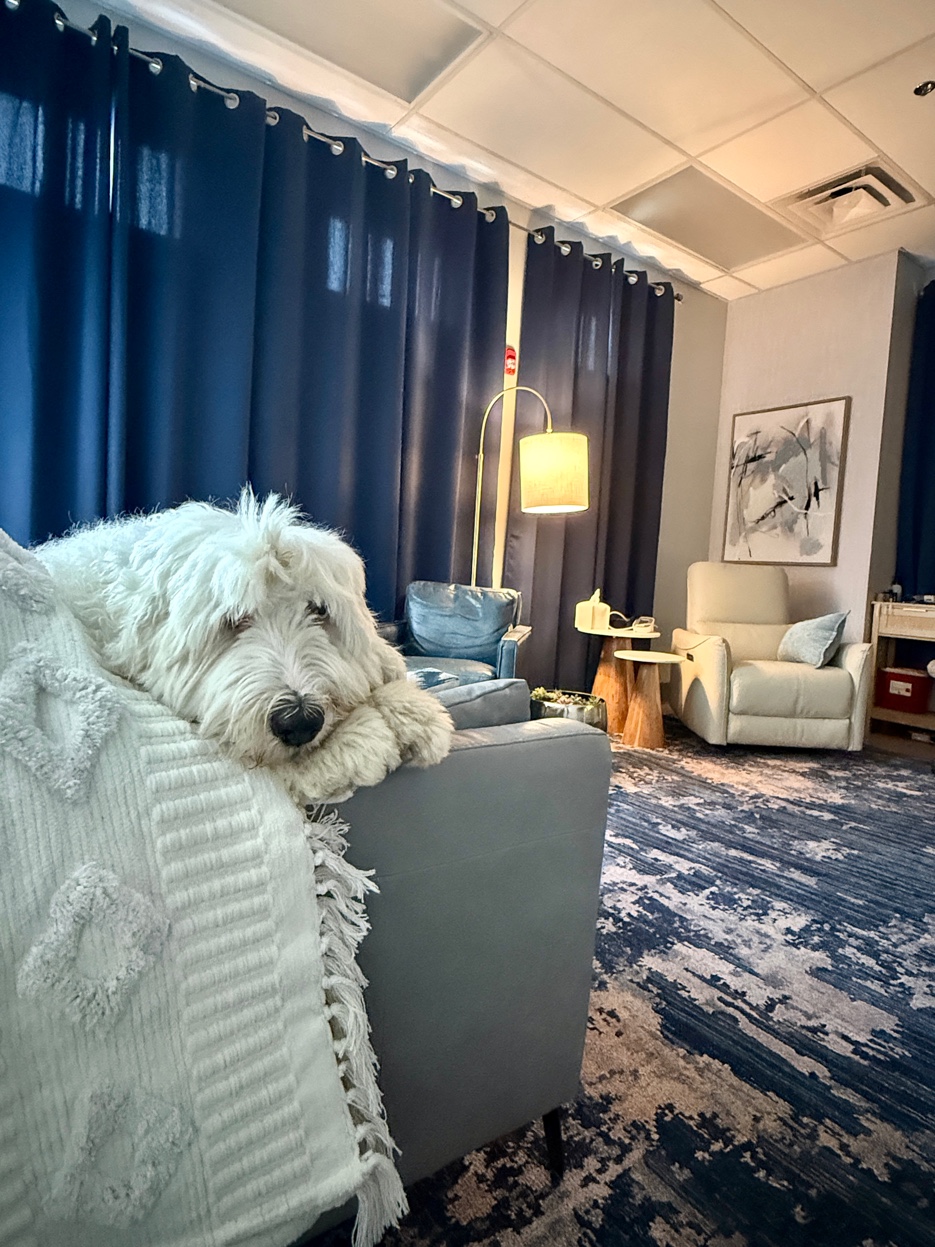
A room that does not feel like another briefing
No after-action review required
We need medications, medical history, and the symptoms that followed you home. We do not need scene details. Trauma-informed care at this clinic is built around choice and control.
Therapy stays in the plan
Trauma-focused therapy remains first-line. Ketamine is an adjunct we may discuss when that work has stalled or when depression and hyperarousal make it hard to use. With permission, we coordinate with your therapist, chaplain, or department clinician.
Monitoring, not a waiting room cattle call
One patient at a time. Continuous vital-sign monitoring. Marla oversees the infusion and adjusts the dose to how you respond. You choose music, lighting, and whether a partner sits in. You can stop at any time.
Clinic dogs, only if you want them
Walter White and Wilma are often in the building. For some people a calm dog is grounding. For others it is one more variable. Tell us which you prefer.
What the evidence says
Useful research, not a guarantee
The best-studied ketamine uses in this conversation are treatment-resistant depression and chronic PTSD. First-responder studies exist, and they are smaller than many people expect. They do not prove that everyone in uniform will benefit, and they do not replace screening.
We wrote the longer, cited versions here: ketamine for first responders and ketamine for first-responder spouses. Related pages cover PTSD, firefighter mental health, and grief when a line-of-duty or sudden death is part of the picture.
Your path
What happens next
- A free conversation. On your phone, on your time. No story required.
- Medical screening with Marla. History, medications, and whether ketamine is a safe fit. Sometimes the honest answer is that sleep, therapy, or medical care should come first.
- A plan around the rotation. When treatment is offered, most series start with six infusions over two to three weeks. You need a ride and a full day off duty after each visit.
- Private infusions. About 40 minutes of infusion, about an hour door to door, at 480 Duke Dr., Suite #100, Franklin, TN 37067.
- Follow-up without a sales script. Maintenance only if it is helping. We decide together.
Each infusion is $475. HSA and FSA cards are accepted, and we provide superbills for possible out-of-network reimbursement. See all pricing.
Questions
First responder FAQ
Do you see police, fire, and EMS?
Yes. We evaluate adults from law enforcement, fire, EMS, dispatch, and related roles, and we also talk with spouses and partners. Listing a role does not establish eligibility. Screening still has to match your medical history and the evidence for your symptoms.
Do I have to tell you what I have seen on the job?
No. You never have to describe calls, scenes, or names. Marla needs your medical history, current medications, and the symptoms you are living with. The story belongs to you and, if you choose, your therapist or department clinician.
Can a spouse or partner come, or be treated too?
A support person can sit with you if you want that. Spouses and partners can also request their own consultation. Secondhand stress is real, and it is still a medical screening, not an automatic yes. Read our article on first-responder spouses for the evidence and the limits.
Can you work around shift schedules?
Monday-Friday, 9 AM-5 PM. Weekends and evenings by appointment. You will need a ride home after every infusion and should not return to duty, drive, or operate equipment for at least 24 hours. Contact the clinic to see whether a time can fit your rotation.
Is this covered by insurance?
IV ketamine for mental health is off-label, so insurance typically does not cover it. Each infusion is $475. HSA and FSA cards are accepted, and we provide superbills if you want to submit for possible out-of-network reimbursement. Coverage is not guaranteed.
If you are in crisis or thinking about suicide, call or text 988 (veterans, press 1) or go to your nearest emergency room. Ketamine therapy is not an emergency service.